
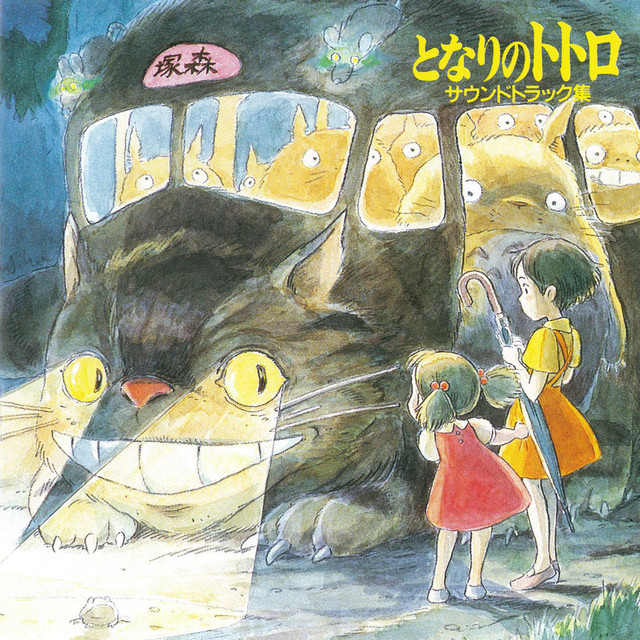
Album: となりのトトロ サウンドトラック集
When Joe Hisaishi sat down to compose the music for Hayao Miyazaki’s My Neighbor Totoro in 1988, he faced a peculiar challenge. How do you create a soundtrack for a film about forest spirits and childhood wonder without falling into the trap of saccharine children’s music? The answer, as documented in the resulting soundtrack album, lies in Hisaishi’s sophisticated approach to balancing orchestral grandeur with ethnic musical elements—a technique that would define not just this score, but his entire collaborative relationship with Studio Ghibli.
The composer’s philosophy was clear from the outset: conventional orchestral arrangements alone would reduce the film to “just an ordinary children’s movie.” Instead, Hisaishi developed what he calls a structural approach that had been evolving since his work on Nausicaä of the Valley of the Wind. This involved weaving together traditional Western orchestration with ethnic instrumentation and minimalist musical principles, creating a sonic landscape that could support the film’s gentle magical realism without overwhelming it.
This delicate balance becomes immediately apparent in the opening theme “Sanpo” (Walking), which serves as one of the soundtrack’s main pillars. Rather than opening with bombastic fanfare, Hisaishi crafted a deceptively simple melody that incorporates subtle ethnic elements. The track demonstrates his commitment to avoiding what he termed “strong music” that might detach itself from the visual narrative. Given that My Neighbor Totoro lacks the dramatic intensity of more plot-driven films, Hisaishi recognized that overpowering musical themes would create an awkward disconnect between sound and image.
The most fascinating example of Hisaishi’s hybrid approach appears in “Kaze no Toorimichi” (The Path of the Wind), which he referred to as the “hidden theme” of the soundtrack. This instrumental piece accompanies the film’s tree-centered scenes and perfectly embodies his minimalist-ethnic fusion. The track layers repetitive musical patterns characteristic of minimalism with unconventional instrumentation, creating an atmosphere that feels both ancient and contemporary. Notably, Hisaishi personally performed the tabla sounds heard in this piece, sampling his own percussion work to achieve the precise ethnic flavor he envisioned.
This hands-on approach to ethnic elements wasn’t merely aesthetic—it reflected Hisaishi’s deep understanding that authenticity in film music comes from genuine engagement with diverse musical traditions. By playing the tabla himself rather than simply programming synthetic approximations, he ensured that the ethnic components maintained their organic character while serving the film’s narrative needs.
The creative process behind the My Neighbor Totoro soundtrack also marked a significant shift in Miyazaki’s involvement with musical direction. For the first time, the director took the lead in music meetings, jokingly complaining that his frequent collaborator Isao Takahata had been “unfairly monopolizing” such hands-on musical collaboration. This direct engagement between director and composer resulted in a more intimate musical vision, one that closely aligned with Miyazaki’s specific vision for the forest spirits and rural Japanese setting.
However, the recording process faced unexpected challenges that ultimately shaped the album’s final character. Hisaishi fell ill during production, forcing adjustments to his original plan. He had initially envisioned a soundtrack weighted more heavily toward synthesized elements, but circumstances led to a roughly 60-40 split favoring orchestral arrangements over electronic components. Interestingly, Hisaishi later reflected that this unplanned shift toward acoustic instrumentation may have made the soundtrack more accessible to listeners.
This balance between accessibility and sophistication appears throughout the twenty-track album, perhaps most clearly in the titular “Tonari no Totoro” (My Neighbor Totoro) theme. Like its opening counterpart “Sanpo,” this piece demonstrates how Hisaishi managed to create memorable melodies that children could easily sing along with while incorporating enough musical complexity to engage adult listeners. The track avoids the trap of simple童謡 (children’s song) territory that Hisaishi feared, instead offering multiple layers of musical interest.
The composer’s structural approach to the soundtrack reveals a sophisticated understanding of how music functions in animated film. Rather than treating each scene as an isolated musical moment, Hisaishi created thematic connections that span the entire work. The main themes “Sanpo” and “Tonari no Totoro” provide melodic anchors, while the “hidden theme” “Kaze no Toorimichi” offers subtler continuity through the film’s more contemplative moments.
This thematic interconnectedness extends throughout the album’s twenty tracks, creating a listening experience that works both as accompaniment to Miyazaki’s visuals and as standalone musical narrative. Tracks like “Tsukamori no Taiju” (The Great Tree of Tsukamori) and “Tsuki-yo no Hikou” (Moonlight Flight) maintain the ethnic-orchestral balance while supporting specific story beats, demonstrating how Hisaishi’s systematic approach allows for both structural coherence and individual track characterization.
The inclusion of “Sanpo (with Chorus)” as the album’s final track reflects another aspect of Hisaishi’s thoughtful approach to the soundtrack’s construction. By presenting both instrumental and vocal versions of key themes, the album acknowledges its dual function as both film music and independent musical work.
Looking back at the My Neighbor Totoro soundtrack album, what emerges is a document of artistic collaboration at its finest. Hisaishi’s willingness to personally perform ethnic instruments, Miyazaki’s hands-on involvement in musical direction, and the composer’s sophisticated approach to balancing various musical elements created something that transcends typical film music categories. The result is a soundtrack that supports one of animation’s most beloved films while standing as a compelling musical work in its own right—a balance as delicate and effective as the forest spirits it was created to accompany.
- さんぽ-オープニング主題歌-Read Review
- 五月の村Read Review
- オバケやしき!Read Review
- メイとすすわたりRead Review
- 夕暮れの風Read Review
- こわくないRead Review
- おみまいにいこうRead Review
- おかあさんRead Review
- 小さなオバケRead Review
- トトロRead Review
- 塚森の大樹Read Review
- まいごRead Review
- 風のとおり道(インストゥルメンタンル)Read Review
- ずぶぬれオバケRead Review
- 月夜の飛行Read Review
- メイがいないRead Review
- ねこバスRead Review
- よかったねRead Review
- となりのトトロ-エンディング主題歌-Read Review
- さんぽ(合唱つき)Read Review
Sources
- My Neighbor Totoro Roman Album