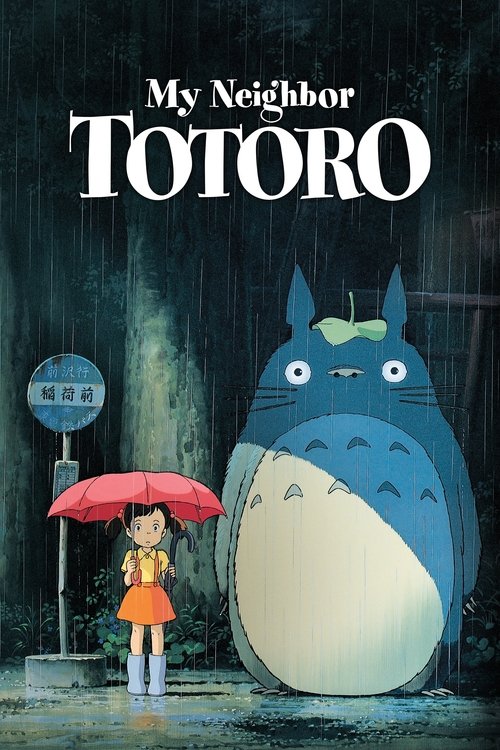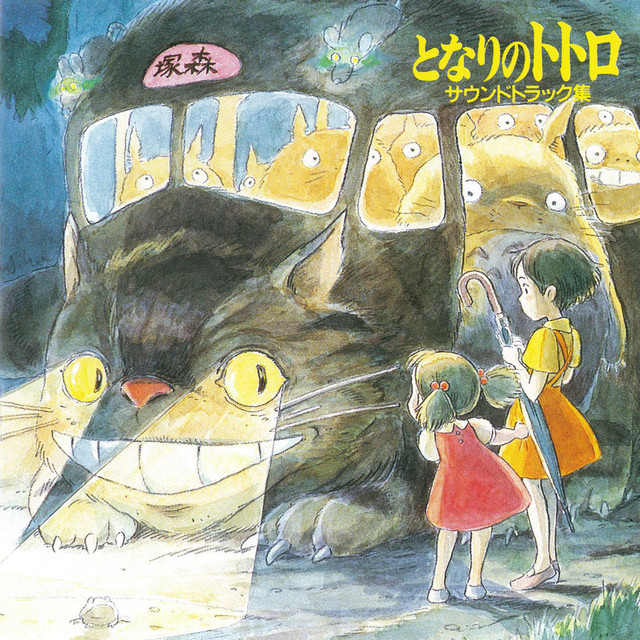
Album: となりのトトロ サウンドトラック集
Picture this: Hayao Miyazaki, for the first time in his career, taking full control of a film’s musical direction. It was 1988, during the production of ‘My Neighbor Totoro,’ and Joe Hisaishi found himself in uncharted territory. ‘Miyazaki was leading the music meetings himself,’ Hisaishi recalls, ‘and he kept saying Takahata was being unfair for having done it differently.’ This shift in creative dynamics would profoundly shape not just the film’s iconic soundtrack, but also illuminate Hisaishi’s evolving approach to scoring family films.
Among the gems that emerged from this collaboration was ‘Omimai ni Ikou’ (Let’s Go Visit), a piece that perfectly encapsulates Hisaishi’s philosophy of avoiding what he calls ‘ordinary children’s movie music.’ The track serves as a window into the composer’s sophisticated balancing act between accessibility and artistic integrity.
‘If I write purely orchestral music, it becomes just another typical children’s film,’ Hisaishi explained when discussing his approach to the Totoro soundtrack. This concern drove him to develop what became a signature Ghibli sound: the marriage of ethnic elements with traditional Western orchestration. ‘Let’s Go Visit’ exemplifies this philosophy beautifully, featuring tabla rhythms that Hisaishi himself performed and sampled, layered beneath sweeping orchestral arrangements.
The creative process behind ‘Let’s Go Visit’ reveals Hisaishi’s hands-on approach to world music integration. Rather than simply hiring session musicians or using pre-recorded samples, he personally played the tabla parts, ensuring the ethnic percussion elements felt authentic and intentional. This attention to detail reflects his broader commitment to what he describes as maintaining consistency ‘since Nausicaä’ in blending ethnic and orchestral elements.
Interestingly, the final sound of tracks like ‘Let’s Go Visit’ came about partly through circumstance. Hisaishi fell ill during the recording process, which significantly altered the planned sonic balance. ‘Originally, the ratio was supposed to be reversed,’ he admits, ‘but we ended up with about 60% orchestra and 40% synthesizer. The result might actually be more listenable because of the heavier orchestral presence.’ This happy accident demonstrates how creative constraints can sometimes lead to breakthrough moments.
The piece sits within a carefully constructed soundtrack architecture that Hisaishi describes as built around main themes like ‘Sanpo’ (Walk) and ‘Tonari no Totoro’ (My Neighbor Totoro), with what he calls a ‘hidden theme’ – ‘Kaze no Toorimichi’ (Path of the Wind) – reserved for the film’s tree-emergence scenes. ‘Let’s Go Visit’ functions as connective tissue within this structure, supporting the film’s more mundane, daily-life sequences.
This brings us to another crucial aspect of Hisaishi’s Totoro approach: his decision to create what he termed a ‘song collection’ rather than a purely instrumental score. ‘Daily life sequences work better with songs than instrumental pieces,’ he reasoned. ‘They create clearer scene imagery.’ This insight shaped how pieces like ‘Let’s Go Visit’ were conceived – not as background music, but as emotional anchors for specific narrative moments.
The track’s gentle, walking-pace tempo mirrors the film’s unhurried exploration of childhood wonder. Built around a simple but effective harmonic progression in a major key, it avoids the saccharine trap that often ensnares children’s music through Hisaishi’s subtle incorporation of modal inflections and the aforementioned ethnic percussion elements. The result feels both familiar and slightly exotic – exactly the balance Hisaishi was seeking.
What makes ‘Let’s Go Visit’ particularly fascinating is how it embodies the collaborative tension between Miyazaki’s newfound musical assertiveness and Hisaishi’s artistic vision. The composer admits that Totoro’s ‘weak story structure’ posed unique challenges: ‘The biggest worry was figuring out which parts to strengthen and how.’ Pieces like ‘Let’s Go Visit’ became crucial tools for emotional reinforcement in a narrative that relied more on atmosphere than traditional plot momentum.
Looking back, ‘Let’s Go Visit’ stands as more than just another track on a beloved soundtrack. It represents a pivotal moment in the Ghibli musical evolution – when Miyazaki stepped into the composer’s creative space, when illness forced unexpected artistic compromises, and when Hisaishi’s philosophy of elevated family entertainment crystallized into something truly special. The piece proves that sometimes the most meaningful musical moments emerge not from perfect conditions, but from the beautiful complications of real creative collaboration.
In our current era of increasingly homogenized film music, ‘Let’s Go Visit’ remains a gentle reminder that authenticity and accessibility need not be mutually exclusive – a lesson worth revisiting, indeed.
- さんぽ-オープニング主題歌-Read Review
- 五月の村Read Review
- オバケやしき!Read Review
- メイとすすわたりRead Review
- 夕暮れの風Read Review
- こわくないRead Review
- おみまいにいこうNow Playing
- おかあさんRead Review
- 小さなオバケRead Review
- トトロRead Review
- 塚森の大樹Read Review
- まいごRead Review
- 風のとおり道(インストゥルメンタンル)Read Review
- ずぶぬれオバケRead Review
- 月夜の飛行Read Review
- メイがいないRead Review
- ねこバスRead Review
- よかったねRead Review
- となりのトトロ-エンディング主題歌-Read Review
- さんぽ(合唱つき)Read Review